


☕ Why Micro-Cafés Are Replacing Traditional Break Rooms
- Cherika Kaushal
- May 23
- 2 min read

🚀 The Office Break Room Is Being Reinvented
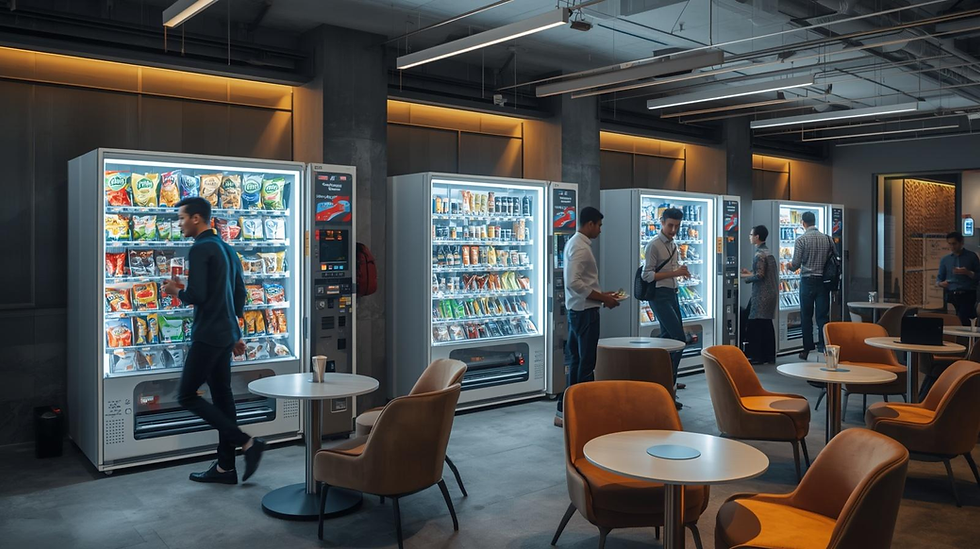
For decades, workplace break rooms followed the same formula:
vending snacks
coffee machines
microwaves
a few tables and chairs
They were designed as simple pause areas — places employees visited briefly before returning to work.
But modern workplaces are changing rapidly, and the traditional break room is no longer enough.
Today, offices are replacing these outdated spaces with something smarter, faster, and more functional:👉 micro-cafés.
📉 The Problem with Traditional Break Rooms
Traditional break rooms were never built for:
flexible work schedules
high-performance environments
modern employee expectations
They often create problems like:
limited food options
unhealthy snack-heavy setups
crowded peak hours
messy shared spaces
inconsistent food availability
Most importantly, they fail to support productivity effectively.
Employees still:
leave the office for proper meals
waste time ordering food
interrupt workflows during lunch hours
The break room becomes a temporary stop — not a real workplace support system.
⚡ The Rise of the Micro-Café
Micro-cafés are changing workplace food experiences completely.
Unlike traditional break rooms, micro-cafés are:✅ compact✅ automated✅ always accessible✅ designed around efficiency
They combine:
smart vending systems
ready-to-eat meal access
café-style workplace environments
self-service convenience
Instead of just offering snacks and coffee, micro-cafés provide:👉 full meals👉 healthier options👉 instant food access throughout the day
🌱 Why Offices Prefer Micro-Cafés
Modern offices are moving toward micro-cafés because they solve multiple workplace challenges at once.
✅ Faster Food Access
Employees no longer need to leave the office or wait for deliveries.
✅ Better Employee Experience
The space feels modern, flexible, and convenient.
✅ Reduced Downtime
Food becomes part of the workflow instead of interrupting it.
✅ Smarter Space Usage
Micro-cafés require far less space than traditional cafeterias or large break rooms.
🏢 How Grubox Supports the Shift
Solutions like Grubox are helping offices build smart micro-café environments through:
intelligent vending systems
home-style ready-to-eat meals
app-based food access
automated food infrastructure
This transforms workplace food into a seamless experience where employees can:✅ access meals instantly✅ maintain focus throughout the day✅ avoid food-related stress and delays
The result is a workspace that feels smoother and more connected.
🌍 Why This Trend Is Growing Fast
Today’s employees expect workplaces to feel:
seamless
flexible
efficient
experience-driven
Traditional break rooms no longer match these expectations.
Micro-cafés align perfectly with the future of work because they combine:
convenience
automation
workplace design
employee well-being
They turn food access into an integrated part of office culture.
🔮 The Future of Workplace Food Spaces
The office of the future will not revolve around large cafeterias or outdated pantry setups.
Instead, workplaces will feature:
distributed food hubs
smart self-service cafés
automated meal systems
flexible food-access spaces
Micro-cafés are becoming the bridge between:👉 productivity👉 workplace design👉 employee experience
🎯 Conclusion: The Break Room Has Evolved
Traditional break rooms were designed for a different era of work.
Micro-cafés are designed for today.
By combining smart food systems with modern workplace experiences, solutions like Grubox are helping offices create spaces that are faster, smarter, and more employee-focused.
Because in the modern workplace,food spaces are no longer just for breaks — they’re part of the productivity system.



Comments